

EAST CHICAGO, Ind. — A new cement plant is running on the Region's lakefront. Ozinga, the family-owned concrete and building-materials company based in Mokena, Ill., cut the ribbon Oct. 13 on a low-carbon cement mill in East Chicago, the company said in a release.
The plant grinds slag, a byproduct of steelmaking, into cement. Ozinga says it will produce 1 million tons a year and calls it the largest plant of its kind in North America.
| Item | Detail | Source |
|---|---|---|
| Opened | Ribbon cutting Oct. 13, 2026 | Ozinga release |
| Output | 1 million tons of slag cement a year | Ozinga release |
| Permanent jobs | About 50 union steelworker jobs at full operation (mill plus Burns Harbor slag site) | Ozinga release |
| Construction jobs | More than 250 temporary, many through Morrison Construction | Ozinga release |
| Shipping | Rail (Indiana Harbor Belt), barge and highway | Ozinga release |
| Groundbreaking | June 2025; then pegged at 50 full-time and 100 construction jobs | Inside INdiana Business |
| Ozinga in Indiana | More than 20 facilities, nearly 400 employees | Ozinga release |
Jobs and the steel link
The slag starts at Cleveland-Cliffs' Burns Harbor steel mill, where Ozinga processes it before it reaches East Chicago. Ozinga says the roughly 50 permanent jobs at full operation will be split between the new mill and that Burns Harbor operation. It did not give a split or a date for full operation.
Construction drew more than 250 temporary workers, many hired through Indiana-based Morrison Construction, an employee-owned firm, the company said. That is up from the 100 construction jobs Ozinga projected when it broke ground in June 2025, Inside INdiana Business reported then. The permanent figure has held at about 50.
Ozinga says it is running ongoing job fairs and workforce programs with the city of East Chicago.
"We built this mill in the heart of the Midwest because we believe it is central to producing high-performing, American-made materials that will be the foundation of U.S. infrastructure for years to come," CEO Marty Ozinga said in the release.
Freight and the cement market
The site has water access and on-site rail. Ozinga says it will ship finished cement by barge and truck, and that rail traffic will be new business for the Indiana Harbor Belt railroad, which connects to all Class 1 railroads.
The company pitches the plant as extra domestic supply. It cites U.S. Geological Survey figures that imports were about 22% of U.S. cement use in 2024. Ozinga says its slag cement and CarbonSense blends cut embodied carbon by up to 80% compared with traditional portland cement mixes. Those are company figures; Region N3 has not independently tested them.
Ozinga said the project had support from Gov. Mike Braun, U.S. Sen. Todd Young, U.S. Rep. Frank Mrvan, East Chicago Mayor Anthony Copeland and the East Chicago City Council. The release did not list any public incentive amounts.
Region N3 will update when Ozinga posts East Chicago hiring dates or reports the plant at full operation.
Photo credit
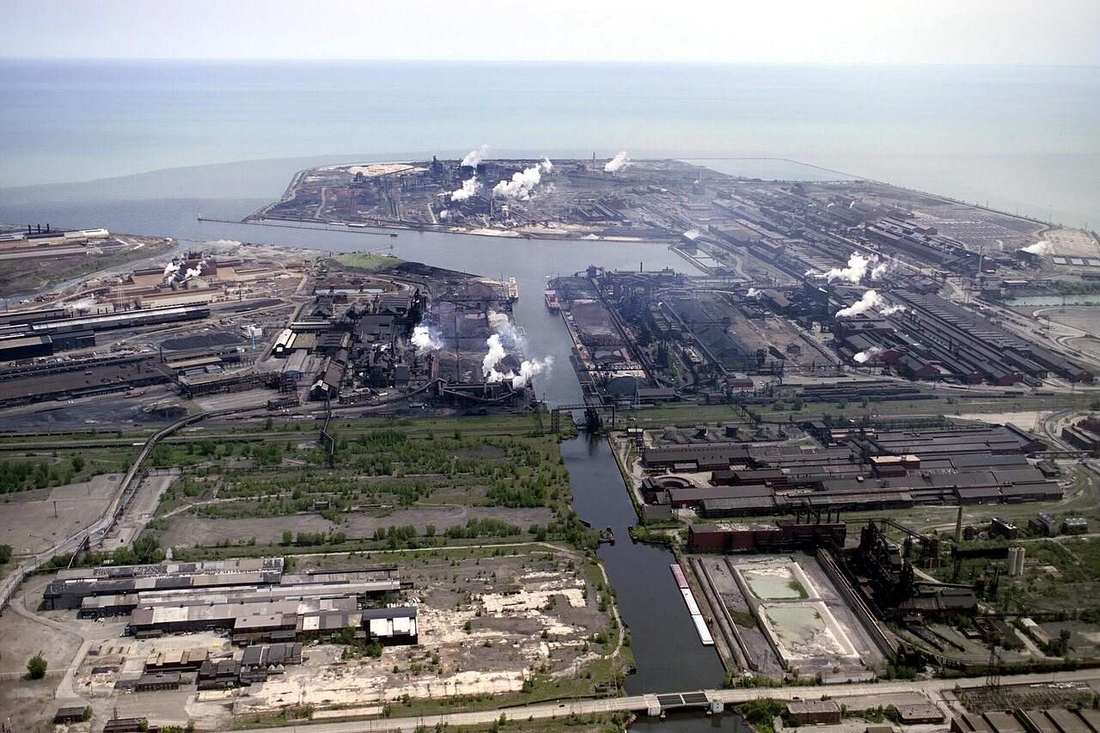
¹ Hero: Indiana Harbor peninsula, East Chicago — U.S. Army Corps of Engineers, Chicago District / Wikimedia Commons, public domain. Place file art; not the Ozinga mill or the ribbon cutting.

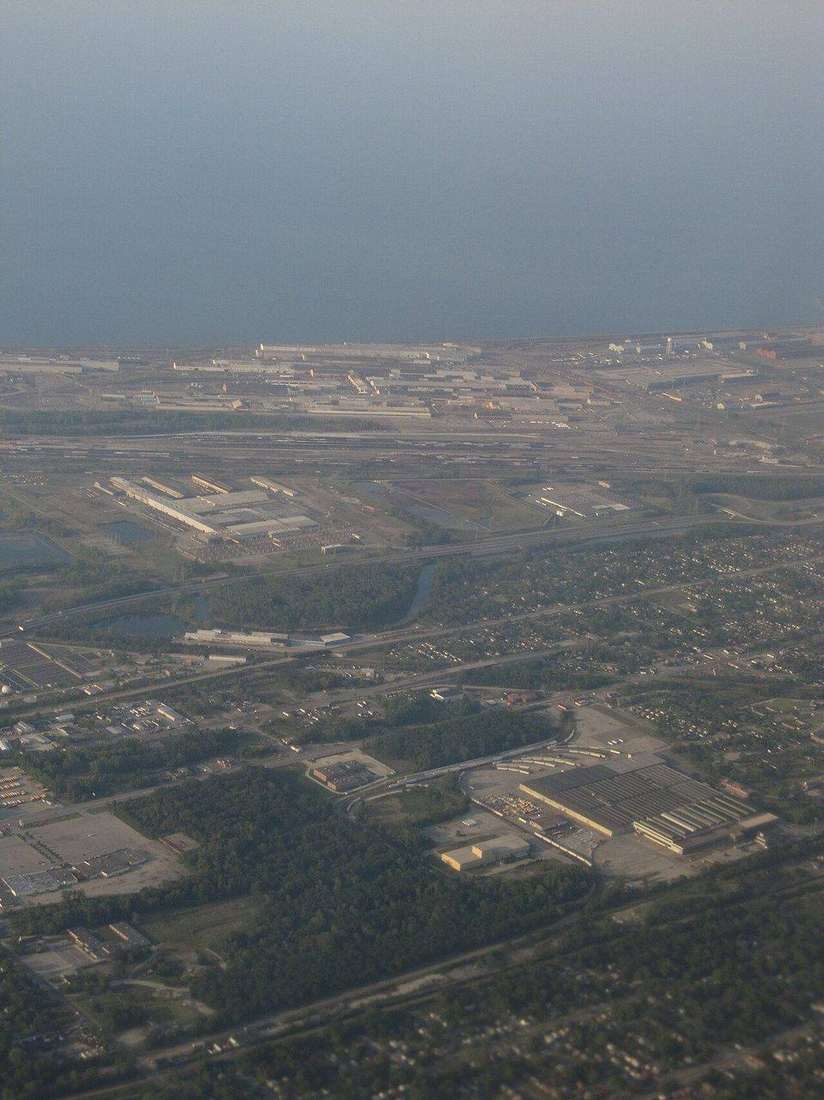
² Inline: U.S. Steel Gary Works — photo by Ken Lund, Wikimedia Commons, CC BY-SA 2.0. Region steelmaking peg (slag source industry); not Cliffs Burns Harbor or the Ozinga plant. Resized for web; this copy is shared under the same license.

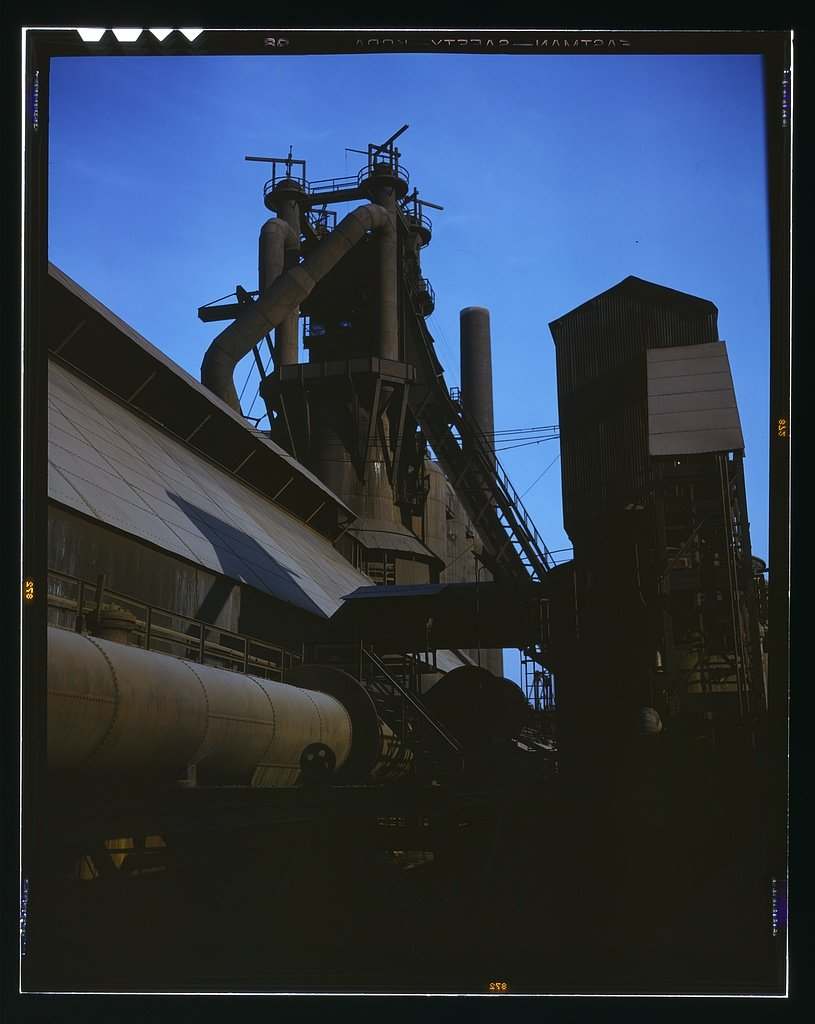
³ Inline: Blast furnace at the Carnegie-Illinois Steel Corp. mill in Etna, Pa., November 1941 — Alfred T. Palmer / Library of Congress via Wikimedia Commons, public domain. Illustrative of where slag comes from; not the Ozinga site.